I made a few quick references to the mode by which I transfer my long and lat data to Google Earth for route display. I was asked whether I was capturing altitude information along with 2D position and the answer to this is yes. In fact, there are a variety of interesting ways of visualising this data. Although Google Earth does allow for some manipulation of this, I recently started using GPS Visualizer to play with this dimension. If you point it at your data file it can provide you with some interesting perspectives on your trips.
The weekend jaunt down country looks like this:
A second cool way of showing this same altitude mapping is to simply colour code the 2D route for altitude. This map was also generated at GPS Visualizer using the same dataset:

Well, Me. My name is Shawn Day and I am a PhD student in the History Department at 


it. The biggest test to date came yesterday when I grabbed a couple new AAA batteries for it and made the fix at the apartment. I popped it in my suit jacket and headed off on a r
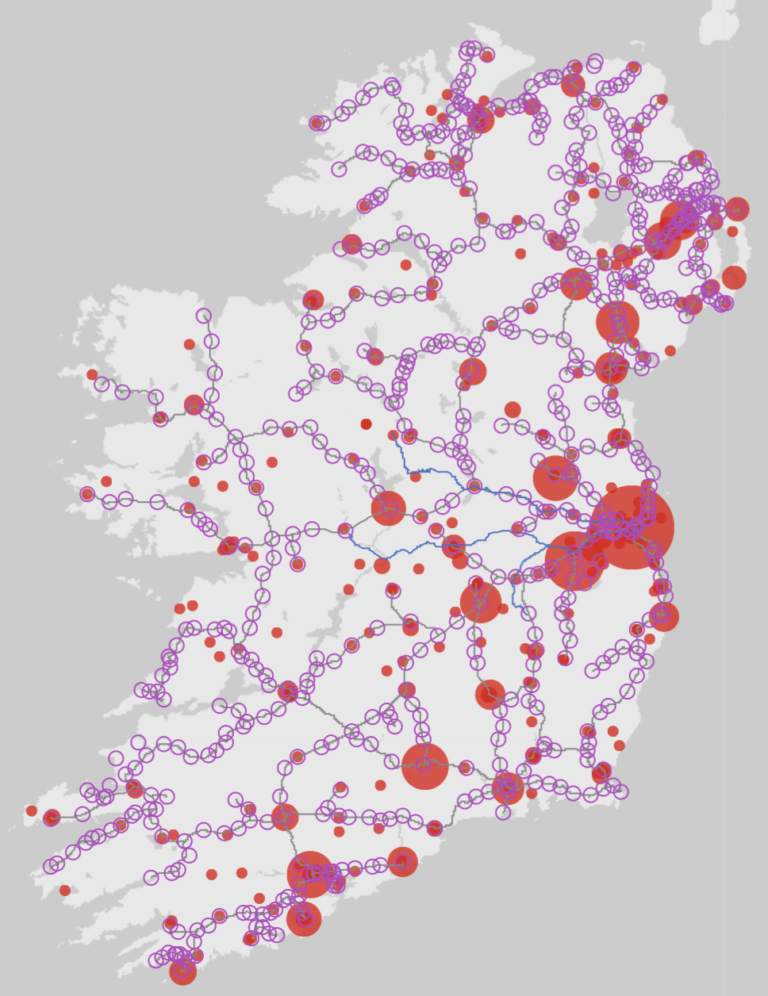
Datalogger. I have long wanted to experiment with one of these and today one arrived in the post from the UK. It’s a small ticket item (€50), but after a short test here I am very, very impressed. A GPS datalogger is just like your fancy GPS car receiver that projects your track on an LCD screen with the difference being, there’s no screen, and it simply records your position to flash memory at regular intervals. You can then download the datafile to your computer and plot the data on a map using google maps or similar.
arrival was a new disposable cell phone. I chose a little
creative juices were sought a middle ground between a clear systematic approach and yearning to find break out of these same systems, I discovered the work of
properties mapped throughout the city. This is, I sense, an increasingly common sort of mashup. But when I did a quick scan, I couldn’t find anything that accomplished this for the area I wanted. Yes, you could plot each place manually in either the
identify the comingled drone of a heavy engine. Then as the sounds grew closer a huge
presented a nuanced and revisionary look at the common story that wartime demand drove Canadian farmers to double acreage devoted to wheat and unwittingly create a dangerous monoculture. A situation that led to a massive collapse in GNP when the price of wheat collapsed after the war. McInnis’ earlier paper “

Recent Comments